
When to Refinish a Deck in Franklin, TN: How Middle Tennessee’s Seasonal Weather Tells You It’s Time
Latest Post
How Middle Tennessee’s Seasonal Weather Tells You It’s Time
A deck in Franklin deals with constant humidity, strong summer sun, and seasonal temperature swings that wear down stain and sealer faster than many homeowners expect. Middle Tennessee weather creates steady pressure on exposed wood, and the signs that a deck needs refinishing usually appear gradually after each season.
Deck refinishing involves removing worn finish, repairing surface-level damage, and applying fresh stain or sealer to restore protection. When timed correctly, refinishing extends the life of the deck and prevents moisture from working deeper into the structure.
How Tennessee Weather Wears Down a Deck Finish
Faded Color
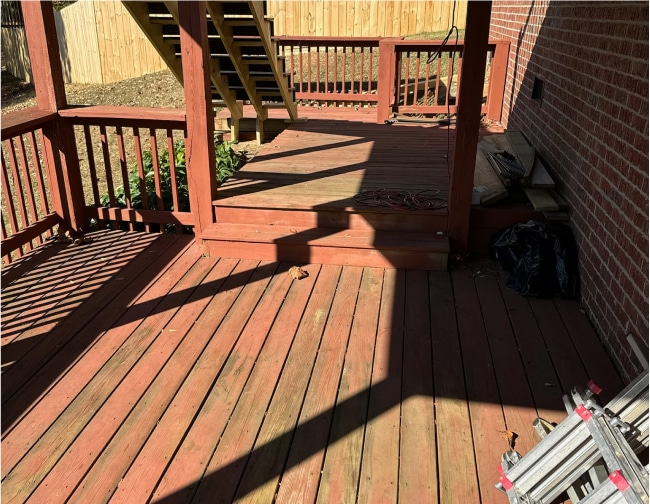
One of the first visible signs of wear is fading. UV exposure slowly breaks down stain pigments, especially on sections facing direct afternoon sun. Boards that once carried rich brown or cedar tones begin shifting toward a dull gray appearance as protection wears away.
South-facing and west-facing sections usually fade first because they receive the most consistent exposure throughout the year. Shaded portions often retain their original color longer, making the contrast easier to spot.
Raised Grain and Rough Texture
As finish wears off, the wood underneath absorbs and releases moisture repeatedly through humid summers and cooler winter conditions. Over time, the grain lifts and the surface becomes rougher underfoot.
Boards that once felt smooth begin developing splinters, fuzzy patches, and uneven texture. This is often a sign that the deck surface has gone too long without protection.
Water Absorption
A healthy finish causes water to bead on the surface instead of soaking into the boards. When water immediately darkens the wood and absorbs into it, the protective barrier has largely failed.
This simple test usually gives a clearer picture than appearance alone. Even a deck that still looks acceptable may already be absorbing moisture below the surface.
Cupping and Cracking
Moisture exposure eventually causes boards to expand unevenly. The edges begin lifting, slight cupping appears across the surface, and cracks form along the grain as the wood dries back out.
Light surface movement can often be corrected during refinishing, but severe cracking usually points to longer-term exposure that needs attention before a new finish is applied.
Mildew That Returns Quickly
Mildew growth is common in Franklin’s humid climate, especially in shaded areas. However, mildew that reappears shortly after cleaning usually means the wood is retaining moisture because the stain or sealer is no longer protecting it properly.
Once moisture starts lingering inside the boards, mildew growth accelerates and spreads more aggressively between seasons.
The Best Refinishing Seasons in Franklin
Late Spring Refinishing Conditions
Late April through early June is typically the best time for deck refinishing in Franklin. Temperatures stay moderate, humidity levels remain manageable, and the deck has fully emerged from winter weather exposure.
This timing also allows enough drying and curing time before intense summer heat arrives.
Fall Refinishing Opportunities
A second strong refinishing window arrives between September and October. Summer humidity begins easing, storms become less frequent, and temperatures stay warm enough for proper curing.
Refinishing during fall helps prepare the wood for winter moisture and freeze-thaw cycles that arrive later in the season.
Why Summer Creates Problems
Summer heat creates difficult working conditions for stain and sealer applications. Surface temperatures on exposed boards can rise far above the actual air temperature, causing finishes to dry too quickly before penetrating the wood properly.
Humidity and sudden afternoon storms also create inconsistent curing conditions that reduce how evenly the finish performs over time.
Why Winter Is a Poor Refinishing Season
Cold temperatures slow curing significantly and prevent stain from bonding correctly to the wood surface. Freeze-thaw cycles during winter can also damage partially cured finish before it fully hardens.
For most refinishing products, winter conditions in Middle Tennessee simply do not provide a reliable application window.
How Often Refinishing Becomes Necessary
Pressure-Treated Pine
Pressure-treated pine decks in Franklin generally need refinishing every two to four years depending on sun exposure and traffic levels. Areas exposed to direct afternoon sunlight usually require attention sooner than shaded sections.
Without regular refinishing, pine dries out quickly and becomes more vulnerable to cracking and surface wear.
Exotic Hardwoods
Hardwoods like Ipe and Cumaru follow a different maintenance cycle. Some homeowners choose to oil these woods regularly to preserve their rich natural color, while others allow them to weather into a silver-gray finish naturally.
The desired appearance largely determines how often refinishing or oiling becomes necessary.
Composite Decking
Composite materials such as Trex, TimberTech, Deckorators, and Fiberon do not require refinishing in the traditional sense. These products are designed to retain their color and resist moisture without staining or sealing.
Cleaning and periodic inspections still matter, but refinishing schedules do not apply the same way they do with natural wood.
Signs Your Deck Is Ready for Refinishing
The clearest way to evaluate a deck is by looking at several warning signs together rather than relying on one issue alone. Fading color, rough texture, moisture absorption, and visible cracking usually appear progressively as the finish breaks down.
If multiple signs are present at once, the deck is generally overdue for refinishing. Addressing the problem early helps prevent more extensive moisture damage and extends the life of both the surface boards and the framing underneath.
Professional Deck Refinishing in Franklin
Proper deck refinishing involves more than applying a fresh coat of stain. Surface preparation, sanding, repairs, cleaning, and product selection all affect how long the finish lasts under Tennessee weather conditions.
For deck refinishing services in Franklin and across Middle Tennessee, Harpeth Decks handles cleaning, sanding, repairs, staining, and sealing for weather-exposed wood decks. Call 615-636-9341 to schedule an inspection or plan your next refinishing project during the next ideal weather window.